
By Raymond Ken-Mbata
INTERNATIONAL
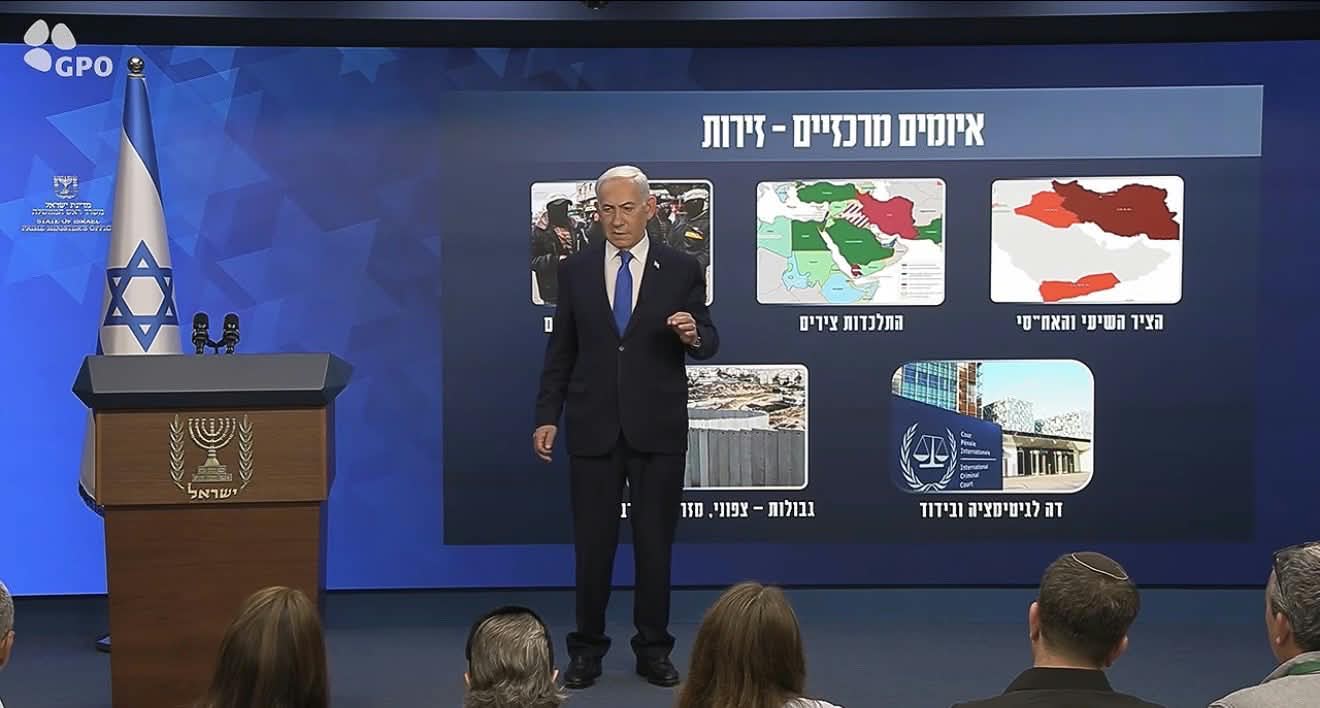
Israeli Prime Minister Benjamin Netanyahu has unveiled a new national security doctrine that places greater emphasis on preventing emerging threats through offensive action, pre-emptive strikes and military preparedness.
Netanyahu announced the updated doctrine on October 18, 2026, saying the October 7, 2023, Hamas attack and the subsequent regional conflict had exposed the need to revise Israel’s traditional approach to national security. The document was developed with assistance from Israel’s National Security Council.
Under the revised approach, Israel intends to maintain military superiority, prevent adversaries from acquiring nuclear weapons, strengthen intelligence and early-warning capabilities, and improve protection for its civilian population. It also emphasises deterrence, strategic alliances and greater domestic capacity to manufacture essential military equipment.
The doctrine identifies Iran’s nuclear programme as a major security concern and stresses the need to respond to evolving threats before they become more dangerous. It also highlights the importance of advanced technology, including artificial intelligence and other capabilities that could strengthen Israel’s military and intelligence operations.
Another major element is the expansion of Israel’s strategic partnerships in the Middle East and beyond. The doctrine also calls for stronger national resilience and a more determined response to antisemitism, alongside efforts to maintain technological advantages over potential adversaries.
The central message is a shift from containing threats towards preventing them, including through offensive operations when Israeli leaders consider them necessary. Netanyahu argues that the experience of recent conflicts has demonstrated the limitations of relying primarily on defensive measures.
However, the approach has raised questions about its implications for regional stability. Analysts have warned that pre-emptive military action and the establishment of buffer zones in neighbouring territories could deepen existing conflicts rather than resolve the underlying security disputes.
The announcement also comes shortly before Israel’s parliamentary elections, adding a domestic political dimension to the debate over Netanyahu’s security record and future strategy.
The doctrine therefore signals a more explicitly proactive Israeli security posture, although its long-term impact will depend on how the government implements it and how neighbouring countries respond.